

Bài thi writing Vstep B2 có cấu trúc gồm 2 phần viết thư và viết luận. Trong đó, bài viết luận chiếm 2/ 3 tổng điểm bài thi. Học viên cần hoàn thành tốt phần thi này để đạt B2.
- Cần nắm rõ các chủ đề thường gặp trong bài
- Các dạng viết luận thường gặp
- Các bước hoàn thiện bài viết luận
Hướng dẫn viết luận writing B2 Vstep
Trong bài thi VSTEP, kỹ năng Viết (Writing) đóng vai trò quan trọng trong việc đánh giá khả năng sử dụng tiếng Anh ở mức độ học thuật. Nếu ở trình độ B1, thí sinh chỉ cần viết đoạn văn ngắn, câu đơn giản và trình bày quan điểm cơ bản, thì với Writing B2 đòi hỏi mức độ nâng cao rõ rệt.
- Bài viết phải có lập luận rõ ràng, biết phân tích – giải thích – đưa ví dụ, sử dụng câu phức, từ vựng học thuật và kết nối ý logic.
- Đồng thời, mỗi đoạn văn cần tuân theo cấu trúc học thuật: câu chủ đề – phân tích – ví dụ.
Dưới đây là yêu cầu và tiêu chí chấm điểm ở B2 (so với B1)
- Từ vựng học thuật rộng hơn, đúng chủ đề xã hội, tránh lặp lại từ đơn giản.
- Cấu trúc câu phức – đa dạng, thể hiện khả năng diễn đạt nâng cao.
- Khả năng lập luận: phân tích 2–3 ý sâu, không chỉ mô tả.
- Mạch lạc – liên kết tốt: sử dụng từ nối học thuật, triển khai ý có logic.
- Bố cục bài luận hoàn chỉnh thay vì một đoạn văn dài như B1.
Mỗi dạng bài sẽ có cách triển khai các ý chính khác nhau. Tuy nhiên, bài vẫn phải đảm bảo đủ bố cục 3 phần: Mở bài – Thân bài – Kết bài. Học viên có thể theo dõi các bước làm bài dưới đây:
- Bước 1: Đọc và hiểu kỹ đề bài
- Bước 2: Lập dàn ý
- Bước 3: Viết bài
- Bước 4: Kiểm tra lại bài viết

Đăng ký nhận tài liệu ôn thi tiếng anh B2 Vstep – Chuẩn định dạng format bài thi của Bộ Giáo dục
Tổng hợp bài mẫu viết luận writing Vstep B2
Dưới đây là bộ sưu tập các bài mẫu Writing B2 theo đúng 4 dạng bài thi B2 VSTEP. Mỗi bài đều thể hiện cấu trúc luận chuẩn, từ vựng học thuật và cách phát triển ý đạt trình độ B2.
Phân tích ưu điểm, nhược điểm (Advantages and Disadvantages)
- Đặc điểm: Yêu cầu phân tích mặt lợi và hại của một xu hướng (ví dụ: học online, làm việc từ xa).
- Chiến thuật: Cấu trúc bài viết cần cân bằng. Thân bài 1 phân tích các Ưu điểm nổi bật. Thân bài 2 phân tích các Nhược điểm tiềm tàng. Nếu đề bài có câu hỏi mở rộng “Do the advantages outweigh the disadvantages?” (Lợi có át được hại không?), thí sinh cần đưa ra sự so sánh và đánh giá cuối cùng trong phần Kết bài.
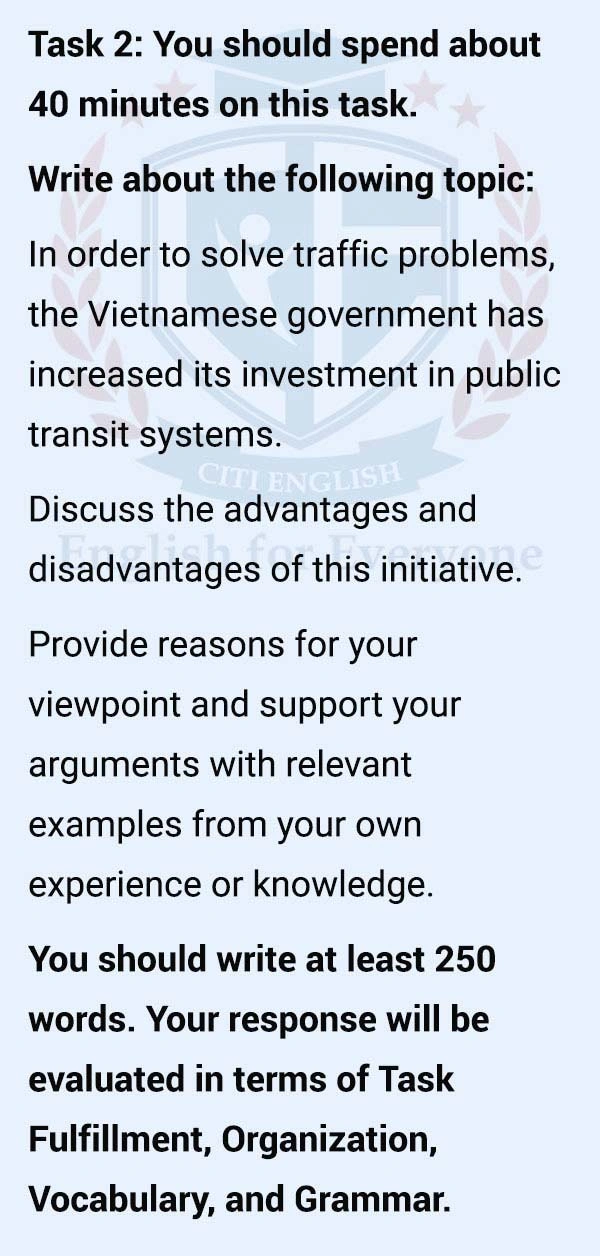
In response to the escalating traffic challenges, the Vietnamese government has recently intensified its investment in public transit systems, a move that garners both praise and criticism. This essay will explore the pros and cons of this initiative, shedding light on its complex nature.
One significant advantage of bolstering public transit is the potential reduction in traffic congestion. As more people opt for efficient public transportation, the strain on road networks is likely to decrease, leading to smoother traffic flow. Additionally, promoting public transit can enhance road safety by reducing the number of private vehicles on the road, thus lowering the risk of accidents.
Furthermore, increased investment in public transit is expected to address environmental concerns. Public transportation tends to be more eco-friendly, emitting fewer pollutants and reducing carbon emissions compared to individual vehicles. This shift aligns with global efforts to combat climate change and improve air quality.
However, the road to an improved public transit system is not without challenges. The construction phase can disrupt daily routines, causing inconvenience to commuters and local residents. Traffic diversions and delays may lead to short-term frustrations, testing the patience of those directly affected by the changes.
Moreover, the financial implications, such as increased taxes to fund the project, may burden low-income households. While the long-term benefits are promising, the immediate impact on individuals with limited financial resources needs careful consideration.
In conclusion, the Vietnamese government’s investment in public transit is a commendable step toward addressing traffic issues. Despite the associated inconveniences and financial challenges, the long-term advantages, including reduced congestion, enhanced safety, and environmental benefits, make this initiative crucial for building a sustainable and efficient transportation system.
Để đáp ứng trình độ B2, bài mẫu trên đã sử dụng một số từ vựng và cấu trúc ngữ pháp như sau:
- Từ vựng học thuật: Động từ/Danh từ: escalating traffic challenges (Thách thức giao thông leo thang), bolstering public transit (củng cố hệ thống giao thông công cộng), garners both praise and criticism (thu về cả lời khen và chỉ trích), financial implications (hàm ý tài chính), burden low-income households (gánh nặng lên hộ gia đình thu nhập thấp).
- Ngữ pháp phức tạp: Participle Clause (Mệnh đề Phân từ): Sử dụng ở Mở bài: “…shedding light on its complex nature.” (thể hiện tính học thuật).
- Cấu trúc bị động: …the strain on road networks is likely to decrease… (diễn tả khả năng xảy ra một cách trang trọng).
- Cấu trúc câu phức tương phản: While the long-term benefits are promising, the immediate impact… needs careful consideration.
Phân tích vấn đề và giải pháp (Problem – Solution)
- Đặc điểm: Đề bài đưa ra một hiện tượng tiêu cực (ví dụ: ô nhiễm môi trường, kẹt xe) và yêu cầu phân tích nguyên nhân hoặc hậu quả, từ đó đề xuất giải pháp.
- Chiến thuật: Thí sinh cần chia thân bài thành 2 đoạn rõ rệt. Đoạn 1 tập trung phân tích 2-3 nguyên nhân gốc rễ (Causes). Đoạn 2 đề xuất các giải pháp tương ứng (Solutions) để giải quyết triệt để các nguyên nhân đã nêu.
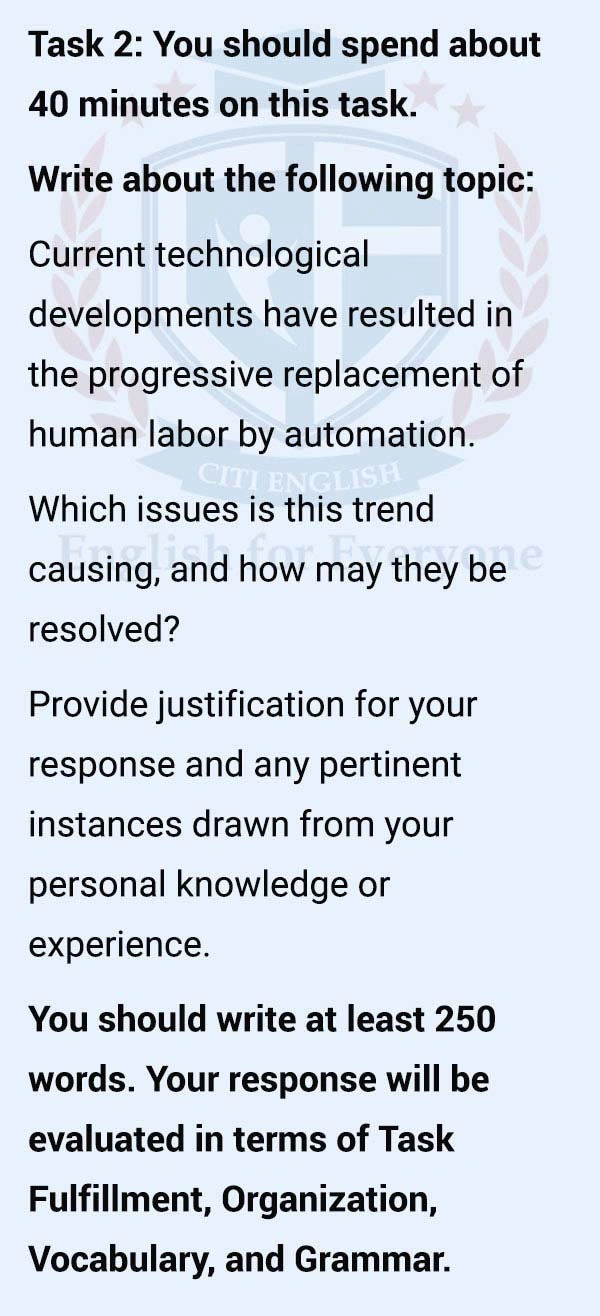
In the era of rapid technological advancements, the integration of machinery into the workforce has become increasingly common. While this promises efficiency and innovation, it also raises concerns about potential challenges and effective solutions.
One primary issue arising from automation is the potential loss of jobs for human workers. As machines take over routine tasks, certain professions may face obsolescence, leading to unemployment and economic disparities. Sectors like manufacturing and customer service are witnessing a decline in human employment due to the increased use of robots and artificial intelligence.
Moreover, the technological skills gap presents a challenge. Many workers lack the skills to operate and maintain advanced machinery entering the workplace, exacerbating unemployment. Comprehensive retraining programs are needed to equip workers with the necessary skills to adapt to the evolving job market.
The societal impact of automation also includes income inequality. As businesses adopt cost-effective automated solutions, wealth concentration among tech giants increases. Implementing policies like progressive taxation or universal basic income is crucial to address this issue.
In conclusion, while technological progress offers benefits, it also poses challenges related to job displacement, skills gaps, and income inequality. Addressing these problems requires collaboration among governments, businesses, and educational institutions to ensure a smooth transition into an automated future that benefits society as a whole.
Một số từ vựng và ngữ pháp mà bài mẫu trên đã sử dụng, nhằm đáp ứng với trình độ B2 như:
- Từ vựng: Danh từ/Cụm danh từ: job displacement (thay thế công việc), economic disparities (chênh lệch kinh tế), skills gap (khoảng cách kỹ năng), wealth concentration (tập trung của cải), face obsolescence (đối mặt với sự lỗi thời), exacerbating unemployment (làm trầm trọng thêm thất nghiệp).
- Ngữ pháp phức tạp: Sử dụng Danh từ trừu tượng: The integration of machinery into the workforce… (Thay vì Machines are integrated…).
- Cấu trúc giải pháp (Gerund as Subject): Implementing policies… is crucial to address this issue. (Thể hiện tính giải quyết vấn đề).
- Mệnh đề quan hệ rút gọn: …machinery entering the workplace…
Đưa ra quan điểm, ý kiến (Opinion/Argumentative essay)
- Đặc điểm: Đề bài đưa ra một quan điểm gây tranh cãi và hỏi “Do you agree or disagree?”.
- Chiến thuật: Thí sinh bắt buộc phải thể hiện quan điểm cá nhân (Đồng ý/Phản đối/Đồng ý một phần) ngay từ Mở bài. Cả hai đoạn thân bài phải tập trung đưa ra luận điểm và ví dụ để bảo vệ quan điểm đó. Tuyệt đối không ba phải hoặc thay đổi quan điểm ở phần Kết bài.

The debate over fast food consumption revolves around its convenience versus its health risks. While its quick availability may suit busy lifestyles, I firmly advocate for caution in incorporating fast food into our diets.
Supporters of fast food argue its quick, accessible nature fits well into hectic schedules. For instance, professionals with demanding jobs may find it a time-saving option.
However, the health risks of frequent fast food consumption are significant. These meals often lack the nutrition needed for a balanced diet and can lead to obesity, high cholesterol, and cardiovascular diseases.
In my opinion, balance is crucial. While occasional indulgence may be acceptable, relying on fast food regularly can have harmful effects. Educating individuals about healthier alternatives and encouraging the food industry to offer nutritious options are vital steps.
In conclusion, while fast food provides convenience, prioritizing health is paramount. Finding a balance that accommodates busy lives without sacrificing well-being is essential.
Bài mẫu tập trung vào quan điểm cá nhân về việc tiêu thụ thức ăn nhanh, sử dụng từ vựng, ngữ pháp mới như:
- Từ vựng: Cụm từ lập luận: The debate over… revolves around…, I firmly advocate for caution…, hectic schedules (lịch trình bận rộn), cardiovascular diseases (bệnh tim mạch), prioritizing health is paramount (ưu tiên sức khỏe là tối quan trọng).
- Ngữ pháp phức tạp: Mệnh đề nhượng bộ (Concessive Clause): While its quick availability may suit busy lifestyles, I firmly advocate… (Ngôn ngữ lập luận B2).
- Sử dụng động từ tình thái: …may suit busy lifestyles… (Thể hiện sự mềm dẻo, không tuyệt đối trong lập luận).
- Cấu trúc đảo ngữ (Implicit): …balance is crucial. (Kết cấu câu mạnh mẽ, dứt khoát).
Phân tích cả 2 mặt của 1 vấn đề (Discussion essay)
- Đặc điểm: Đề bài đưa ra 2 luồng ý kiến trái chiều và yêu cầu “Discuss both views and give your opinion”.
- Chiến thuật: Đây là dạng bài đòi hỏi tư duy khách quan. Đoạn thân bài 1 thảo luận về quan điểm A. Đoạn thân bài 2 thảo luận về quan điểm B. Ý kiến cá nhân của thí sinh nên được lồng ghép khéo léo ở cuối thân bài 2 hoặc phần Kết bài. Tránh nhầm lẫn với dạng Opinion Essay (chỉ nói về ý kiến mình thích).
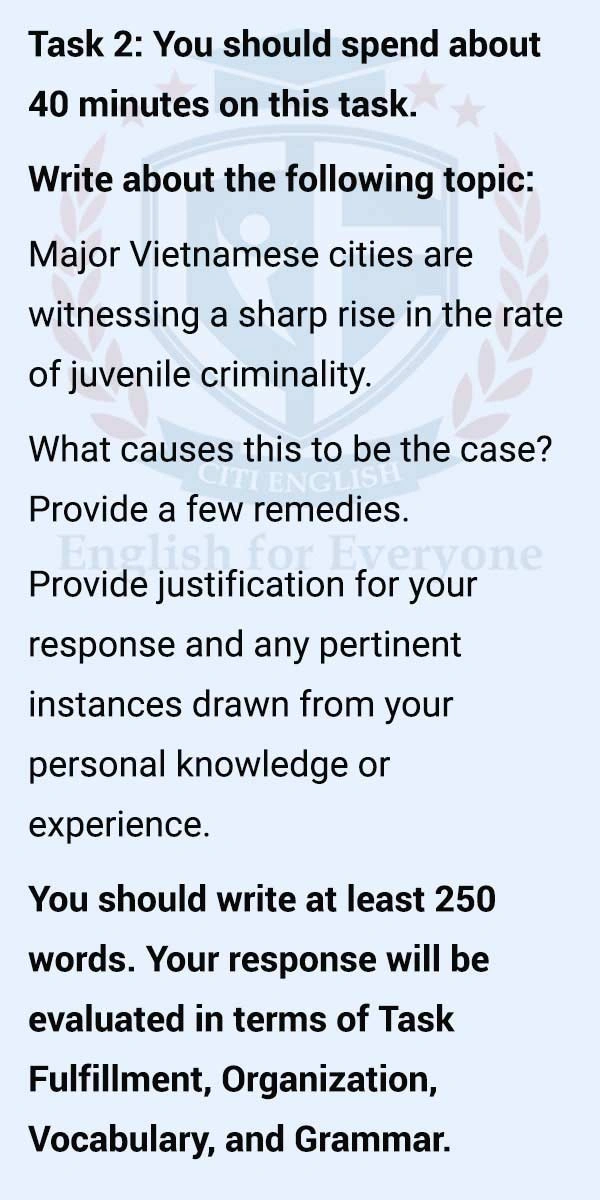
The rise in youth crime in major cities in Vietnam is a complex issue with various underlying causes that require comprehensive solutions to address effectively.
One significant factor contributing to this trend is the socio-economic disparity prevalent in urban areas. As cities develop rapidly, the gap between the affluent and the underprivileged widens, leading to increased frustration and disillusionment among young people. This frustration, combined with limited opportunities, drives some towards criminal activities as a means of survival or empowerment.
Moreover, external influences such as peer pressure and exposure to violence in media also play a role. Young individuals, eager for acceptance and identity, may succumb to negative influences from peers or media depictions of criminal behavior. The lack of proper guidance and mentorship further enhances the vulnerability of youth to criminal tendencies.
Addressing this issue requires a multifaceted approach. Firstly, targeted social programs aimed at reducing socio-economic disparities and providing equal opportunities are essential. Investing in education, vocational training, and community-building initiatives can empower youth and steer them away from criminal paths.
Additionally, preventive measures, including educational campaigns on the consequences of crime and the importance of positive role models, are crucial. Community involvement and support networks can also play a vital role in deterring young people from engaging in criminal activities.
In conclusion, tackling the surge in youth crime necessitates a holistic strategy that addresses root causes and implements preventive measures. By fostering inclusivity, providing opportunities, and promoting positive influences, society can create an environment where youth are less inclined to participate in criminal behavior.
Bài mẫu tập trung vào phân tích vấn đề tội phạm thanh thiếu niên, sử dụng những từ vựng, ngữ pháp sau:
- Từ vựng: Chủ đề Xã hội/Chính sách: socio-economic disparity prevalent (bất bình đẳng kinh tế – xã hội phổ biến), the affluent and the underprivileged (người giàu và người nghèo khổ), succumb to negative influences (đầu hàng trước ảnh hưởng tiêu cực), holistic strategy (chiến lược toàn diện), fostering inclusivity (thúc đẩy tính hòa nhập).
- Ngữ pháp Phức tạp: Sử dụng tính từ phức hợp: …a complex issue with various underlying causes… (Đề cập đến nguyên nhân gốc rễ).
- Cấu trúc tăng cường (Intensifiers): …further enhances the vulnerability… (Làm nổi bật mức độ nghiêm trọng).
- Sử dụng participle clause: By fostering inclusivity, providing opportunities… society can create… (Kết luận có chiều sâu).
Ngoài ra học viên có thể tham khảo thêm một số tài liệu ôn thi B2 phần thi viết dưới đây:
Hy vọng học viên đã có thêm kinh nghiệm trong việc hoàn thành phần thi viết luận writing Vstep B2. Chúc học viên ôn tập tốt và đạt band điểm tối đa trong kỳ thi B2 Vstep!





 Nhắn tin qua Zalo
 Gọi điện trực tiếp
 Tư vấn khóa học